
❦ TEXTCAST · No. 006 · Indie SaaS
“Your process shapes your product. Build sloppy, ship sloppy. Build with intention, ship with confidence.”

By Jacob Counsell
❦ The founder, at a glance
- Solo · indie · three products
- LaunchChair · BuildHop · FreeScan
- ~15 yrs product design · SaaS UX · frontend
- Spec-driven agent loops for SaaS
- Distribution beats product
- X · BuildHop · SEO/AEO/GEO
❦ Part · The problem is building the wrong thing
On why a 15-year product designer built a spec-first stack for the age of AI agents
What made you start what you're building?
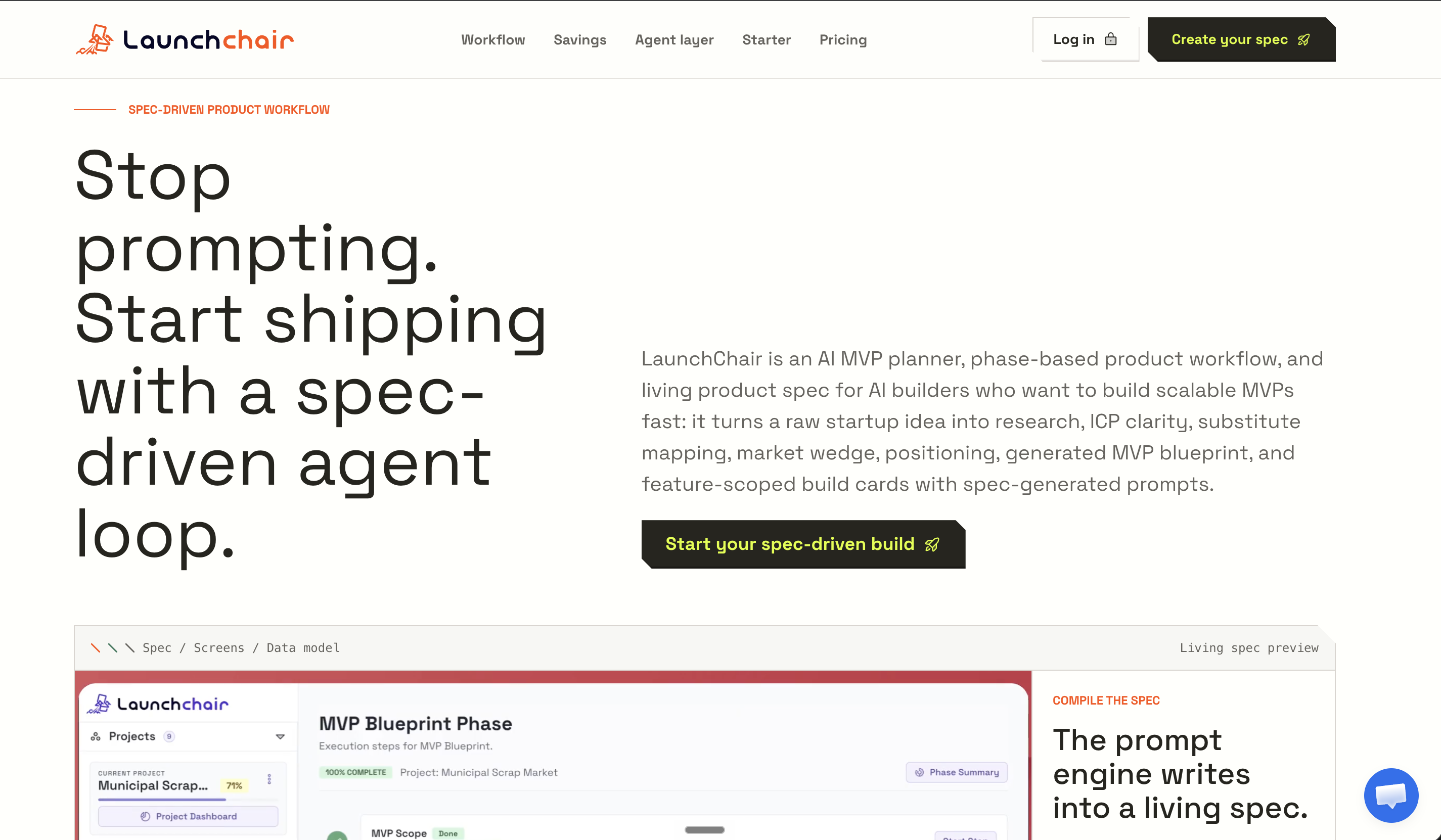
I've been a product designer for about fifteen years. In that time the thing that has killed the most projects — mine and everyone else's — was never the code. It was building the wrong thing. Beautiful execution of an idea nobody wanted. Now AI agents can ship code faster than any of us can think. That should be a gift, but it's actually made the old problem worse. When shipping is cheap, building the wrong thing is cheap too — so people do it at ten times the speed. They vibe-code their way to a polished MVP that solves a problem that isn't there, then wonder why nobody shows up. So I started building the layer that's missing. LaunchChair is an AI MVPer and a living product spec — it turns your market strategy into a spec-driven agent loop before a single line of code gets written. ICP clarity, competitor and substitute mapping, positioning, pricing, MVP scope. Then that same spec drives the build cards your coding agent works from, and the launch pages and SEO after. One document, alive the whole way through.
Why three products instead of one?
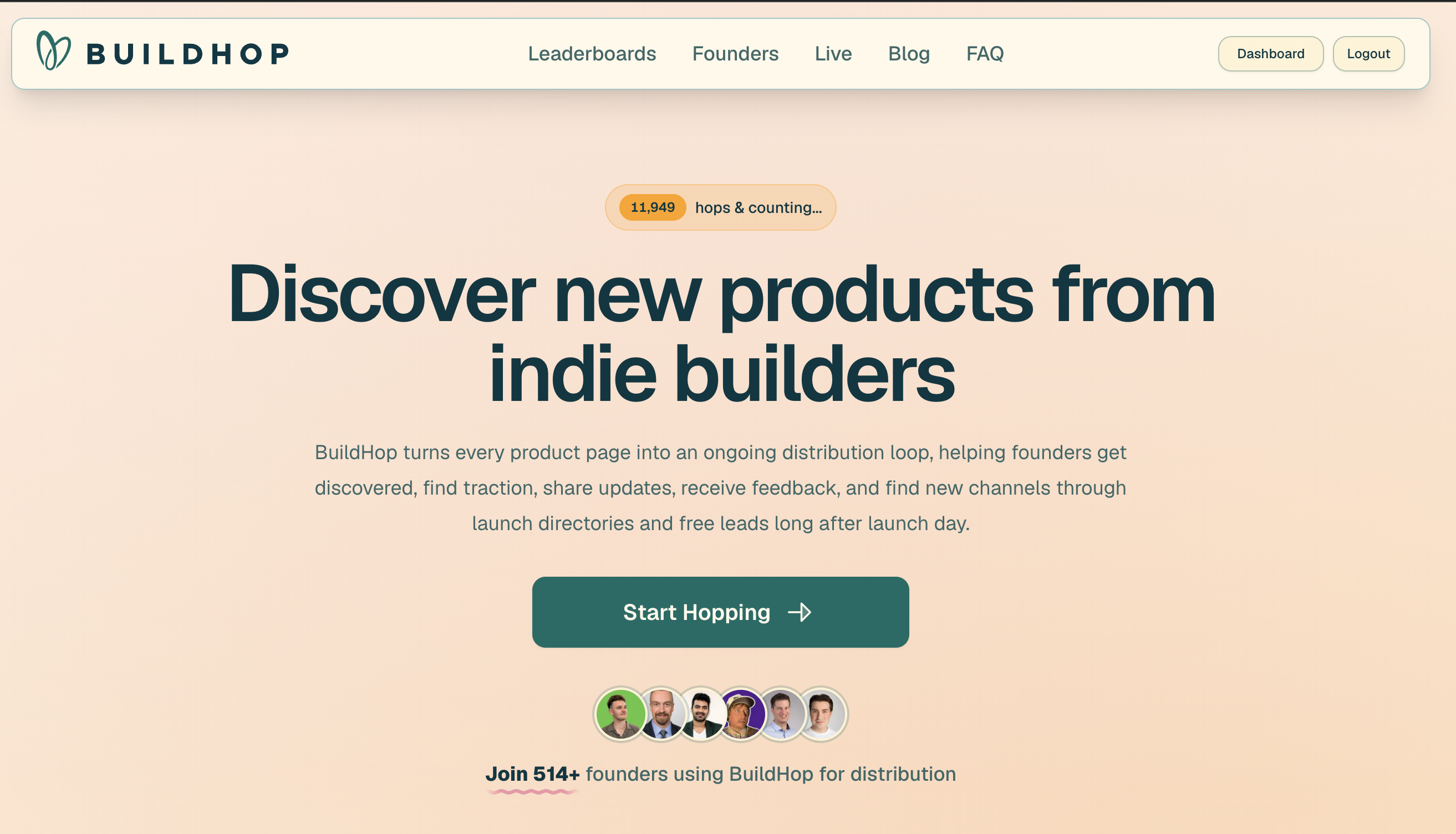
Because the pain doesn't stop when you ship. It just changes shape. LaunchChair fixes the front of the loop — market research that's never thorough enough, MVPs scoped by vibes, prompts that lose the plot halfway through a build. But then you launch, and two new problems show up. The first is the distribution gap. You get one day of attention on launch day and then you fall off a cliff. BuildHop exists for that — it turns product discovery into an ongoing loop instead of a single spike. Live leaderboards ranked on real attention — votes, watch time, momentum, repeat visits — so you stay visible long after launch day. The second is that half of indie launch pages are quietly broken. Missing meta, no schema, security headers wide open, accessibility a mess, a hero that doesn't convert. FreeScan is the free audit for that — paste one URL, get 36 checks back as fixes, opportunities, and insights across SEO, AEO, GEO, security, accessibility, and design. Now it even hands you non-destructive prompts to fix each thing.
The stack, in one place
How the three products chain into one loop:
- 01LaunchChair — validate the market and turn it into a living spec + build cards
- 02Agent API / MCP bridge — let Claude, Codex, or Grok run the spec directly, no manual prompting
- 03Starter boilerplate — customer-owned Next.js + Supabase repo with auth, SEO, and security scaffolded
- 04Launch workflow — the same spec becomes landing pages, schema, and SEO/GEO/AEO content
- 05BuildHop — stay visible post-launch with ongoing discovery and dofollow exposure
- 06FreeScan — audit the live page, catch launch-breaking issues, get fix prompts
❦ Part · Process shapes product
The philosophy under the whole stack
What's the one belief the whole thing is built on?
Your process shapes your product. Build sloppy, ship sloppy. Build with intention, ship with confidence. That's not a slogan I put on a landing page — it's the reason the spec sits at the center of everything. A messy, undocumented, prompt-by-prompt process produces a messy product. A structured one produces something coherent. The spec is just intention made durable, so your agents inherit it instead of guessing. The rest of what I believe follows from that. Talk to users before you build, not after. Launch before you feel ready — you never feel ready, and the feeling isn't information. Distribution beats product; a worse product that people can find beats a better one nobody sees. Boring consistency wins. And your first ten users are everything — they're not a metric, they're the people who tell you whether the thing is real.
What's the biggest mistake you see indie founders make right now?
Treating the AI as the strategy. The agent is unbelievable at execution and completely indifferent to whether the thing is worth executing. So people point it at a vague idea, get a working app back in a weekend, and mistake speed for validation. The fix isn't to slow the agent down. It's to give it a spec that already encodes who it's for, what it competes with, and why anyone would switch. Then the speed is on your side instead of against you.
❦ Part · What's held up
The habit that compounds, and the advice he'd send back
What rule have you kept that's paid off?
Boring consistency. Show up, ship a little, talk to a user, post the thing — every day, whether or not you feel inspired. Most of the founders I watch flame out aren't short on talent. They're short on repetition. They want the launch-day dopamine and none of the quiet Tuesdays that actually build an audience. The quiet Tuesdays are the whole game. That's why I built a distribution product instead of just telling people to 'do marketing' — visibility should compound in the background while you keep building.
What would you tell yourself twelve months ago?
Ship the ugly version and start distributing on day one. I spent too much of my career polishing before anyone had ever seen the thing, because I'm a designer and polishing feels like progress. It isn't. It's hiding. The spec-first stack I'm building now is basically a letter to my past self: figure out if it's worth building, build the smallest real version, and get it in front of people the same week — not the same quarter.

❦ ❦ ❦
❦ Lightning round
Quick answers, short clock.
Best tool you didn't expect to pay for?
A good MCP bridge. Letting agents operate a real spec instead of me hand-feeding prompts changed how I work overnight.
One book that changed how you build?
The Mom Test. Talk to users without letting them lie to you to be nice.
Where do you actually find users?
X, and BuildHop's discovery feed — the second one is kind of the point.
One thing that's overrated?
Launch day. It's a spike, not a strategy. Distribution is the days after.
What's keeping you up at night?
Making sure the spec layer stays useful as the agents get scary good at everything downstream of it.
❦ Key takeaways
- ●Validate and spec first: run your idea through LaunchChair to pressure-test the market and turn it into a living spec your agents build from — before you burn a weekend building the wrong thing.
- ●Launch, then keep distributing: ship the smallest real version and put it on BuildHop so visibility compounds in the background instead of dying on launch day.
- ●Audit before you promote: run your homepage through FreeScan to catch launch-breaking SEO, security, and accessibility issues — and use the fix prompts to close them fast.
❦ Interviewed by Girish Kotte for FoundersHub
❦ Where to find them
- LaunchChair — AI MVPer & living product spec
Stop prompting. Start shipping with a spec-driven agent loop — validate, plan, build, and launch from one living spec.
- BuildHop — founder distribution engine
Ongoing product discovery for indie founders. Endless startup inspiration, one hop at a time.
- FreeScan — free website audit
Paste one public URL, get a prioritized report across SEO / AEO / GEO, security, accessibility, and design.
❦ Your story
Want to share yours?
We read every submission. We publish the best — your words, no ghostwriting.
Apply to be featuredThe Founder's Stack
One tip, one comparison, one founder story.
Every week. No noise.